Pad Thai Authentic Thai Street Food Noodle Recipe
A popular Thai street food made with rice noodles, shrimp, tofu, eggs, and tamarind sauce.
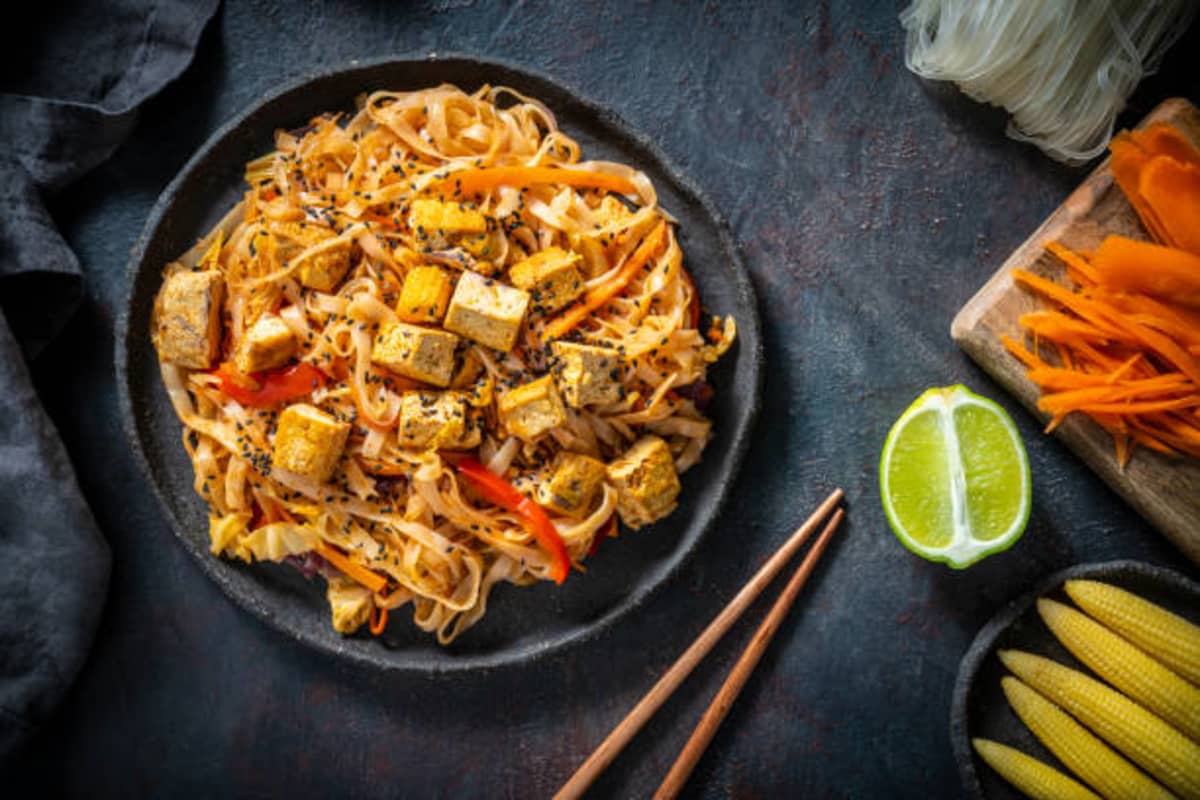
Pad Thai

ByKavitha
Quick Info
- Prep: 20 mins
- Cook: 15 mins
- Servings: 4
Ingredient Substitutes
- Shrimp -> Chicken
- Fish sauce -> Soy sauce
Ingredients
- 250g rice noodles
- 200g shrimp, peeled and deveined
- 100g firm tofu, cubed
- 2 eggs
- 2 tbsp tamarind paste
- 2 tbsp fish sauce
- 1 tbsp palm sugar
- 1 tsp chili flakes
- 1 cup bean sprouts
- 2 tbsp roasted peanuts, crushed
- 2 cloves garlic, minced
- 2 tbsp oil
- Lime wedges for serving
Instructions
- Soak rice noodles in warm water until soft, then drain.
- Heat oil in a wok over medium-high heat.
- Add garlic and stir-fry briefly.
- Add shrimp and tofu; cook until shrimp turns pink.
- Push ingredients aside and scramble eggs in the wok.
- Add drained noodles and toss well.
- Mix tamarind paste, fish sauce, sugar, and chili flakes; pour into wok.
- Stir-fry until noodles absorb sauce.
- Add bean sprouts and toss briefly.
- Serve topped with crushed peanuts and lime wedges.
From Soaked Rice Noodles to Street-Side Perfection: The Complete Pad Thai Experience
Pad Thai is more than a noodle stir-fry — it is a symbol of Thailand’s vibrant street food culture, especially in the bustling markets of Bangkok. The dish represents harmony in contrast: sweet balanced with sour, salty softened by heat, soft noodles paired with crunchy toppings. Although simple in appearance, authentic Pad Thai relies on precise timing, high heat, and well-balanced sauce preparation.
Preparing the Rice Noodles Properly
The foundation of Pad Thai begins with flat rice noodles. They must be soaked in warm water until pliable but not fully soft. Over-soaking can make them mushy during stir-frying, while under-soaking leaves them stiff and uneven.
Properly soaked noodles should bend easily without breaking. They will finish cooking in the wok when combined with sauce.
Preparing the Sauce in Advance
Pad Thai sauce is a careful balance of tamarind paste, fish sauce, palm sugar, and chili flakes. Tamarind provides sourness, fish sauce adds salt and umami depth, and palm sugar brings subtle sweetness with caramel notes.
The sauce must be mixed beforehand because stir-frying moves quickly. The balance should taste slightly strong on its own, as it mellows once absorbed by noodles.
Stir-Frying at High Heat
Authentic Pad Thai is cooked over high heat in a wok. The oil is heated until shimmering before garlic is added briefly to release aroma without burning.
Shrimp and tofu are added next. Shrimp should cook only until pink and opaque. Overcooking makes them rubbery.
Eggs are pushed to one side and scrambled lightly before being folded into the noodles.
Combining Noodles and Sauce
Drained noodles are added directly into the wok. The prepared sauce is poured evenly over them. Using quick tossing motions, the noodles are stirred until they soften completely and absorb the sauce.
This stage requires attention — too little heat prevents proper caramelization; too much heat can dry out the noodles.
Adding Texture and Freshness
Bean sprouts are added toward the end to preserve crunch. Roasted peanuts are sprinkled generously for nutty depth.
A squeeze of fresh lime just before serving enhances brightness and sharpens flavor.
Flavor and Texture Balance
Perfect Pad Thai should taste layered — tangy from tamarind, savory from fish sauce, lightly sweet from palm sugar, and mildly spicy from chili flakes. The noodles should be tender yet slightly chewy.
Serving the Thai Way
Pad Thai is served hot, often garnished with extra lime wedges, chili flakes, and crushed peanuts. It pairs beautifully with Thai iced tea or coconut water.
In Bangkok street stalls, vendors cook Pad Thai rapidly over roaring flames, creating subtle smokiness known as 'wok hei.' This smoky aroma elevates the dish beyond simple stir-fry.
Pad Thai remains Thailand’s most internationally recognized dish, representing balance, speed, and bold flavor in every bite.
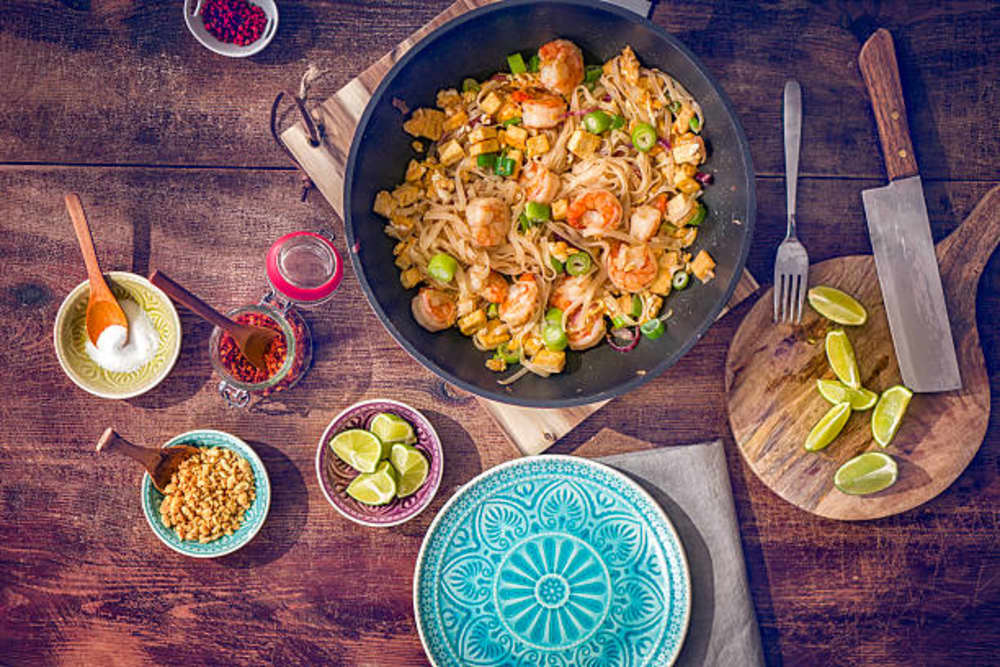
Tips & Variations
Do not overcook noodles | Prepare sauce before cooking | Use high heat for authentic flavor | Adjust chili for spice level | Add extra lime for freshness
You will love it
Pad Thai is thailand's most internationally recognized dish, especially popular in bangkok street markets. This flavorful stir-fry combines soaked rice noodles with shrimp, tofu, scrambled eggs, bean sprouts, peanuts, and a tangy tamarind sauce. The balance of sweet, sour, salty, and spicy flavors makes Pad Thai a vibrant and satisfying meal enjoyed worldwide.
Serving: Serve hot with fresh lime wedges and extra chili flakes. Pair with Thai iced tea or coconut water.
Storage: Refrigerate 2 days; reheat in wok
Tools Required
FAQ
Can I make Pad Thai vegetarian?
Yes, replace shrimp and fish sauce with tofu and soy sauce.
What can replace tamarind paste?
Lime juice mixed with a little brown sugar can substitute.
Is Pad Thai very spicy?
Spice level can be adjusted easily.
Can I use chicken instead of shrimp?
Yes, chicken works very well.
How long can leftovers be stored?
Refrigerate up to 2 days and reheat gently.
📝 From Our Kitchen
Pad Thai became globally famous in the 20th century and is now a symbol of Thai cuisine. Street vendors in Bangkok often prepare it quickly over high heat for a smoky flavor.
— Kavitha, Cheffo Kitchen
Kavitha
Founder & Publisher • Culinary Editor
Hi, I’m Kavitha — the founder of Cheffo. Cooking has always been close to my heart, especially traditional recipes passed down through families. Through Cheffo, I share authentic regional dishes with clear instructions and practical tips so you can recreate those comforting flavors at home.